When should I start caring for my child’s teeth?
As soon as your baby’s teeth appear, you should clean them with a wet piece of gauze or damp washcloth after feedings. When the rest of the teeth have come in, brush them gently with an extra soft, baby tooth brush like My First Colgate toothbrush. It helps to have your child lay his head in your lap so you can see the teeth better when your brush.
Remember that the teeth of babies, who sleep with a bottle of milk, formula or fruit juice in their mouth can suffer from decay known as Milk Bottle Tooth Decay. So the bottle should be removed as soon as the feed is over and do not use the bottle as a pacifier.
Why are milk teeth so important?
Even though primary (milk) teeth eventually fall out, they do serve a very important function. Besides helping in chewing, speech and good looks. Milk teeth reserve space for permanent teeth, so if a tooth is lost too early, new teeth could grow in crooked. If the milk teeth are well looked after, then it is more likely that the permanent teeth will grow in their correct position.
There are many ways to help prevent early decay, beginning with regular checkups. But if a cavity does develop in a milk tooth, be sure to have it filled. And if your child accidentally knocks a tooth out, place it in cool milk or the baby’s saliva or water and get to the dentist within half an hour so it can be replanted in your child’s mouth. This should be followed even for permanent teeth.
When should I make my child’s first dental appointment?
When your child is about a year old, it’s time he or she sees a dentist. Early visits can prevent minor problems from becoming major ones, and even though you are checking your child’s teeth, you may not recognize a problem. Don’t wait until there is a decayed or injured tooth to introduce your child to a dentist; make the first visit a positive one.
YOUR CHILD’S FIRST DENTAL VISIT.
- Familiarize your child with the dentist and dental office by taking him or her along with you; letting your dentist know in advance allows time for them to get acquainted.
- Your child may enjoy a “ride” in the dental chair; perhaps your dentist will use the dental mirror to show your child his or her teeth
- Be low key about the visit; your child has no reason to be afraid unless it’s suggested.
- Take cues from the dentist who’s experienced at dealing with children, and don’t expect perfect behaviour from your child.
How can I teach my child proper dental care?
Imitation is the best way to teach your child how to brush and floss. Children as young as 2 or 3 can learn to brush by watching you, although you should follow up with a thorough brushing of their teeth.
Get the children into the habit of brushing at least twice a day with a good toothpaste and toothbrush which gives maximum benefit to children. Parental supervision is however essential upto age 6 to prevent/minimise swallowing of toothpaste & teach the correct technique of brushing. Ensure that children rinse & spit after brushing. Parents should also floss their toddlers teeth. By the age of 10, children should be able to floss by themselves. Most of all, sure to praise your child for clean teeth, a nice smile and good oral health habits?
How can we help avoid cavities?
Out of all age groups, children are most susceptible o cavities. It’s critical that they brush twice a day and floss daily to remove plaque, the colourless film of bacteria that forms on teeth and leads to tooth decay and gum disease.
A well balanced & nutritious diet promotes good oral health. However try and reduce ‘between-meal’ snacks specially of foods which contain sugar or carbohydrates in order to inhibit acid formation in the mouth. Do not get into the habit of giving your child a sweet to stop a tantrum or as a reward.
And remember, regular dental checkups are the key to healthy oral development.
YOUR CHILD’S THUMBSUCKING.
- Thumbsucking is a natural occurrence for many babies and new-borns and they derive satisfaction from it. During the first year of life, thumbsucking should not be discouraged.
- If thumbsucking continues beyond four to five years of age, consult your dentist. If the habit is allowed to continue, it can lead to crooked teeth (Malocclusion).
Children need healthy teeth for chewing speaking clearly and looking good. With the advancements in dentistry and oral care products, today’s generation has a better chance than ever to grow up with strong, cavity free teeth.
Parents, too, play an important role in a child’s dental development, because better oral health for your child begins with you.
BRUSHING THE CORRECT WAY :
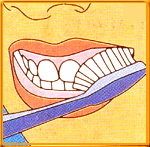
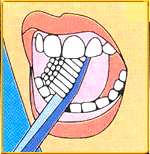
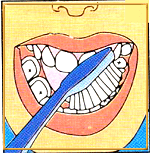
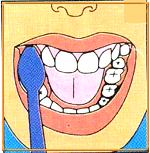
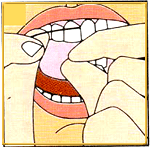
Finally, massage your gums with your fingers after brushing and gently brush your tongue too. Do not use metal tongue cleaners.
Brought to you by Colgate under its “Young India” Dental Health programme in the interest of patent education and better dental health.